
The Brief
The bills Nigerians pay every week are business plans
Fuel, trips for cash and food that spoils drain Nigerian homes and shops every week. Each leak is a small business waiting for someone who can make it cheaper.
Petrol averaged N1,596.25 a litre in Nigeria in May 2026. That bill is paid again every week.
Anyone who has run a large building site knows where budgets leak. Fuel for the generator, trips to fetch cash, and materials that spoil before they are used.
Nigerian homes and shops leak in the same three places. This guide is for starters with N100,000 to N500,000. It shows three businesses that plug those leaks, what each takes, and how to start safely.
Get one real business opening in Africa each week, sized in dollars. Free.
A bill people already pay is a customer already found
The strongest small businesses sell a saving on a cost people already carry. Nobody needs to be taught to want cheaper power or fresher tomatoes. Your job is to be closer, cheaper or more reliable than what they use now.
That makes the first test simple. Ask a shop owner what fuel costs them each month. Ask a farmer how many crates spoil before market day.
Their answer tells you the size of the saving you can sell. It also sets your price, because a fair share of that saving is your income.
The best business ideas in Nigeria for a beginner pass this test first. The three below each start with a bill you can measure this week.
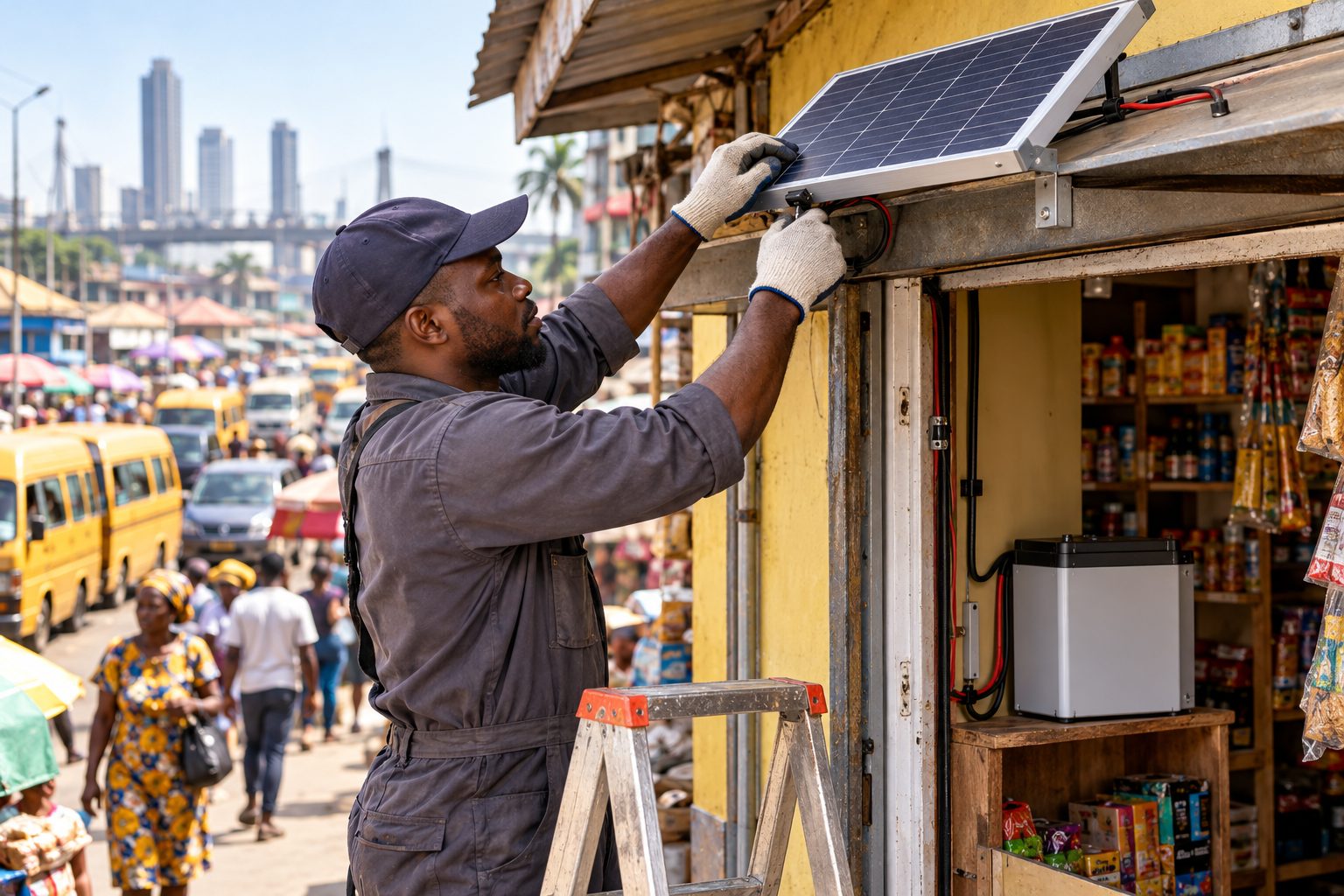
Solar care rides the fuel bill
Solar is the clearest saving in Nigeria right now. Nigeria imported 1,721 megawatts of solar panels between July 2024 and June 2025. Only South Africa imported more in Africa.
Ember found the diesel saved pays back the panels within six months in Nigeria. Petrol is costly too: Dangote’s Lagos depot price was N1,348 a litre on 15 October 2026, before transport and pump margins.
Every panel needs someone to fit it, clean it and fix it. That work suits a small business.
In 2026, a 3kVA inverter system with installation was listed at about N718,500 to N821,000. The customer pays for the kit, so your costs are tools, transport and skill.
Learn the trade first with a trained installer. Many start with cleaning and repair jobs, then move to full systems.
A POS agent sells time saved
A POS agent saves people a trip to the bank. You give out cash or take deposits, and you charge a small fee.
Central Bank of Nigeria guidelines set clear limits. Cash-out is capped at N100,000 per customer per day and N1.2 million per agent per day. Rules on where agents sit and which provider they work with took effect on 1 April 2026.
Those caps set your ceiling. Your income is the fee on each transaction, minus your provider’s charges. Check what nearby agents charge before you set your price.
Location matters more than anything else. A busy market or an estate gate with no bank nearby works best.
You need a terminal from a licensed provider, a float and cash on hand. Keep a clear record of every transaction each day.
Cold storage saves food that would rot
Food loss is one of Nigeria’s largest hidden bills. Nigeria lost an estimated N3.5 trillion to N5 trillion of food after harvest in 2025. An estimated 40 percent of its food is lost or wasted each year.
A farmer who keeps tomatoes fresh for a few more days can sell at a better price. That makes storage a service people will pay for.
ColdHubs, a Nigerian company, runs solar cold rooms. Its fee was listed at about N100 per 20 kg crate per day.
A full cold room is a larger build. You can start smaller by collecting crates from farms or acting as a local agent for an existing cold room.
What can you start with N100k or N500k?
With N100,000, start with a service that needs skill more than stock, such as panel cleaning or crate collection. With N500,000, you can fund a POS terminal and float, or a small solar repair kit.
| Idea | Start with N100k | Start with N500k | What it takes |
|---|---|---|---|
| Solar | Panel cleaning, apprentice work | Tools, small repair stock | Training, a trusted supplier, safe wiring |
| POS agent | Not enough for a working float | Terminal and a starting float | A busy spot, a licensed provider, records |
| Cold storage | Crate collection for a cold room | Local agent for a cold room | Farmer trust, transport, steady power |

In solar and cold storage, the customer pays for the big item. Your money goes on skill, tools and trust.
Plan for small, uneven income in your first months. Keep your other income until the numbers are steady.
Start safe with scams, tax and registration
Never pay anyone to give you work or a “starter pack”. Check that money is in your own account before you hand over cash or goods. Fake payment alerts are common, so confirm in your bank app.
Register your business with the Corporate Affairs Commission. Under the Nigeria Tax Act 2025, in force from 1 January 2026, small companies are exempt from company income tax.
The Act defines them as having gross annual turnover not above N100 million and fixed assets below N250 million. Professional services firms do not count.
If you trade as a business name or on your own, your profit falls under personal income tax. Every business needs a tax ID, so confirm your filing duties with the Nigeria Revenue Service.
What to watch
- By November 2026: the next National Bureau of Statistics petrol price report, against N1,596.25 a litre in May 2026.
- By December 2026: any new Central Bank of Nigeria rule on POS cash-out limits, now N1.2 million per agent per day.
- By December 2026: the price of a crate of tomatoes in your market as the dry season starts, when storage matters most.
Pick one bill and price it
This week, pick one of the three bills: fuel, cash or spoiled food. Ask ten people near you what they pay for it each month, and write down their answers.
If you can save them a clear share of that cost, you have found your first customers.
Every week we size one real business opening in Africa, like Nigeria’s fuel bill, in dollars. Get next week’s free.
FAQ
What is the most profitable business in Nigeria in 2026?
The strongest small businesses cut a cost people already pay each week. Solar repair, POS agent work and food storage do this for fuel, cash trips and spoiled food. The right one depends on your skills, money and location, so price the bill near you first.
What business can I start with 500k in Nigeria?
With N500,000 you can fund a POS terminal and a starting float, at a busy spot with no bank nearby. You could also buy tools and small stock for solar repair work. Keep part of the money aside for your first months of slow sales.
What business can I start with 100k in Nigeria?
With N100,000, choose a service that needs skill more than stock. Solar panel cleaning, apprentice work with an installer, or crate collection for a cold room are good places to begin. Each one lets you earn while you learn the trade.
Do small businesses pay tax in Nigeria?
Under the Nigeria Tax Act 2025, a small company has gross annual turnover not above N100 million and fixed assets below N250 million. Such companies are exempt from company income tax. Business names and sole traders pay personal income tax on profit, so check with the Nigeria Revenue Service.
The Brief
Get Next Week's Opening.
- How big it is, in dollars.
- What has to be true for it to work.
- Who is placed to move first.
Free. One email a week. One click to leave.