
The Field
Five places. What decides each one.
What is being built is usually clear. What decides whether it works is the part worth reading.
Lagos, Nigeria
CitiesA new financial district is being built on reclaimed coastal land, behind a hard sea defence that has to hold before anything above it matters.
What decides it. Whether the sea defence is maintained on the schedule it was designed to, and whether power and water reach the plots at the rate the buildings arrive. Reclamation is the cheap half. The services under the street are what decide if the district works.
The same wall that makes the district possible is the reason a neighbourhood behind it still has streets.
Lekki, Nigeria
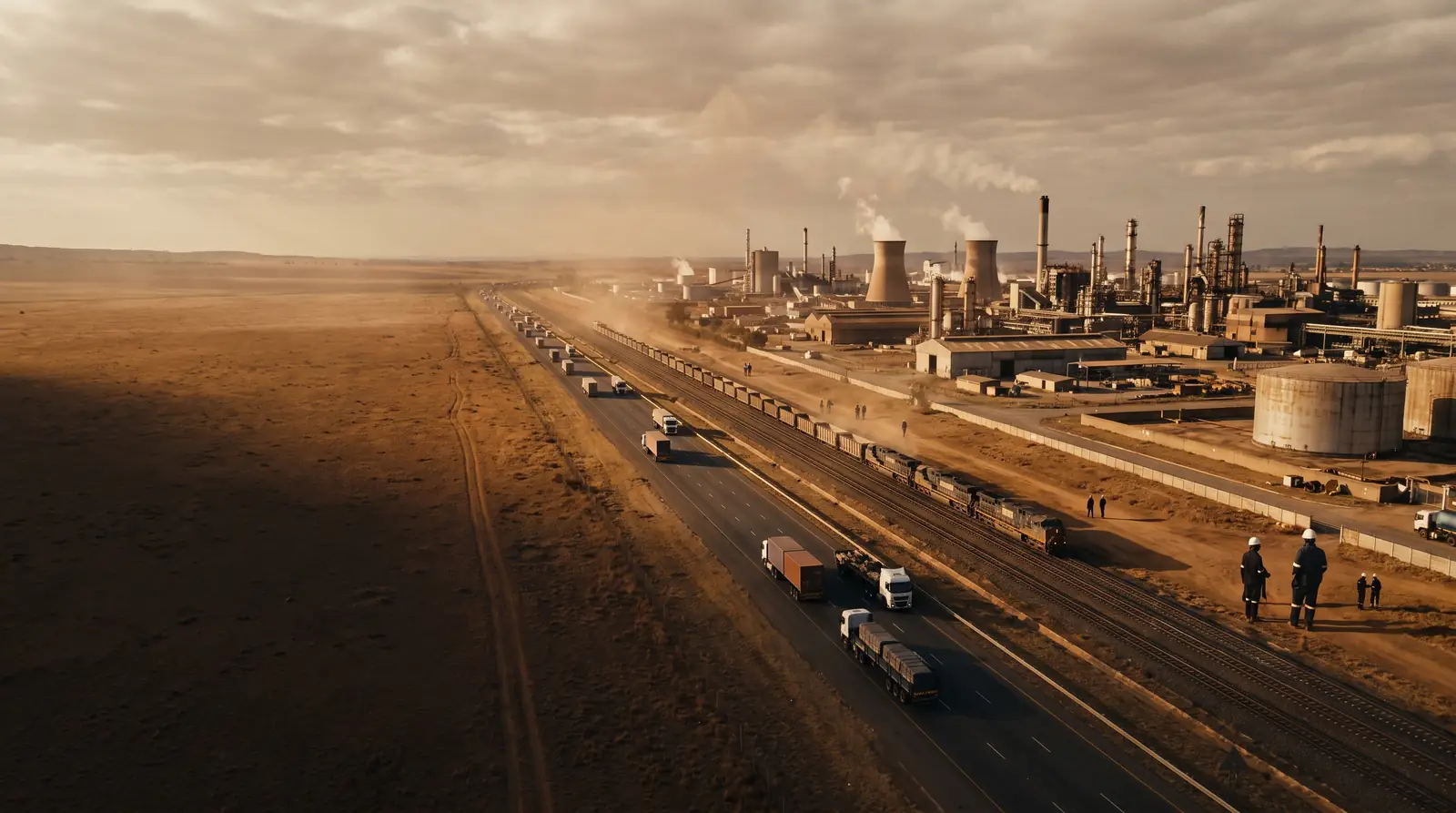
IndustryRefining capacity at continental scale, in a country that spent decades exporting crude and buying back the fuel made from it.
What decides it. Whether domestic pricing holds against export netbacks. A refinery can sell into the local market or into the export market, and the gap between those two prices decides which one it serves.
Fuel refined here is fuel that is not bought back at someone else's price.
Angola, DRC, Zambia
IndustryA rail corridor across three countries, concessioned to move copper west to the Atlantic instead of the long way east.
What decides it. Whether volumes are high enough to fund the rehabilitation capex. The track exists; the question is throughput and who commits tonnage to it before it is proven.
A corridor is not only tonnage. It puts every town along the line on a trade route.
Benishangul-Gumuz, Ethiopia
PowerHydro capacity large enough to change the electricity balance of a region, not just a country.
What decides it. Transmission and regional offtake agreements. Generation without lines to carry it, and neighbours contracted to buy it, is a stranded asset with a very large price tag.
A grid is not only megawatts. It is a factory that can run a second shift, and the people it hires to do it.
Nairobi, Kenya
DigitalCompute capacity and payment rails arriving ahead of the grid interconnection they will eventually need.
What decides it. Power. Data centres are among the most electricity-hungry buildings anyone constructs, and they are being built in a region where 44.9 per cent of people still have no electricity at home.
This is the floor under companies nobody has started yet.
Examples, not a portfolio. No project figures are published here; where a number matters to an argument, it appears in the Brief.
Why these places
The assets differ. The way they fail barely changes.
A sea wall, a refinery, a railway, a dam and a data centre have little in common as engineering. As investments they rhyme. In each one the hard part is the connection: the maintenance plan, the price rule, the committed tonnage, the power line. Learn to read the connection and you see the next project early.
The Brief
Get Next Week's Opening.
- How big it is, in dollars.
- What has to be true for it to work.
- Who is placed to move first.
Free. One email a week. One click to leave.