
The Brief
Poultry farming business plan: the profit is in the feed
On commercial poultry farms, feed can be 60 to 80 percent of production costs. A plan that gets feed right first keeps more of every bird it sells.
Feed can be up to 80 percent of a poultry farm’s costs. That one number decides whether your farm makes money. So if you are writing a poultry business plan in Africa, start there.
Plan your feed costs before you plan your flock. The farmers who get feed right keep more of every bird they sell. And new options, from home mixing to insect protein, can lower that cost.
Get one real business opening in Africa each week, sized in dollars. Free.
How much of a poultry farm’s cost is feed?
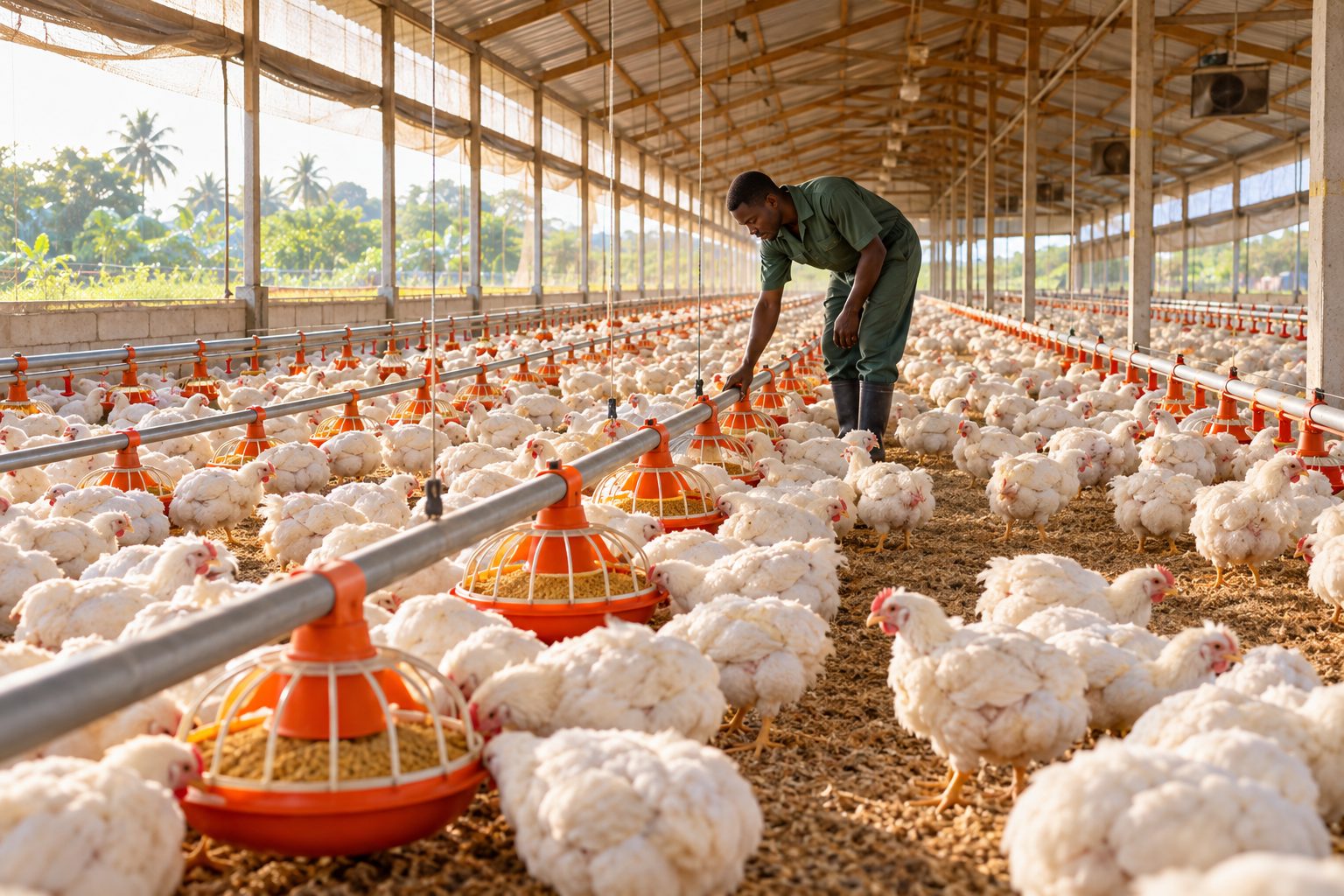
Feed is the biggest cost on most commercial poultry farms. An FAO review looked at Nigeria’s feed industry. It found that ready-made feed can be as much as 60 to 80 percent of production costs on intensive pig and poultry farms. That is more than chicks, labour and housing put together.
This is why feed sits at the heart of a good plan. Clean water, healthy chicks and a dry house all matter. Each one helps your birds grow. But none of them moves your profit as much as what you pay to feed each bird.
So a small saving on feed goes a long way. Show it clearly in your numbers.
Why is feed so expensive?
Poultry feed needs energy and protein. Soybean meal is one of the main protein sources. In Nigeria, soybean sold for 788.83 naira per kilogram on 29 September 2026, according to the AFEX exchange.
Feed mills are not the only buyers of soybean. Vegetable oil makers and food processors buy the same harvest. Mansa Markets, which reports the AFEX price, says supply rarely keeps up with all that demand. So feed mills compete hard for protein.
For a new farmer, this is a real cost to plan for, and it points to the opportunity. A farmer who finds a cheaper protein, or grows part of the feed nearby, can lower the biggest cost on the farm. They can pay less for every bird than farmers who buy all their feed.
What are farmers already doing about it?
Some Nigerian farmers now mix part of their own feed to cut costs. BusinessDay reported in April 2026 that more poultry farmers are switching to homemade blends to cut costs and lift their margins.
Mixing your own feed takes skill. The mix has to give birds the right protein and energy, or they grow slowly. So the fair test is the feed cost for each kilo of bird you sell. The price of a bag is only part of it. If a cheaper mix makes birds grow slower, it can cost more in the end.
Start with dry, clean maize, because mouldy grain can make birds sick. Use soybean meal or properly toasted soybean, not raw beans. Add a ready-made vitamin and mineral premix.
Follow a tested recipe that adds limestone or bone meal for calcium and phosphorus. Layers need extra calcium for strong eggshells.
Send a sample to a feed lab once to check the protein. Then run a small flock on your own mix, next to a flock on bought feed. Weigh birds from both every week.
Keep it simple at first. Buy ready-made starter feed for young chicks, and use your own mix for older birds. If you keep layers, the test is feed cost for each tray of eggs, not each kilo of bird.
Can insects replace soybean in chicken feed?
Yes, in part, and the results are promising. One study was done at the Kenya Agricultural and Livestock Research Organization. Fly larvae meal replaced up to 42 percent of the soy or fish meal in starter feed. It replaced up to 55 percent in finisher feed. The chickens grew just as well, and their meat tasted the same.
The money side looked good too. In that study, the cost-benefit ratio improved by 16 percent. The return on investment rose by 25 percent. The flies are black soldier flies, and their larvae grow on farm and food waste.
Because they grow on waste, the larvae need careful handling to stay clean. So test the protein in each batch before you feed it.
A 2020 study in the Journal of Cleaner Production built a model of what this could mean for Kenya. It imagined the whole poultry sector replacing 5 to 50 percent of its usual feed with larvae meal. In that model, the gain could be 69 to 687 million dollars. That would equal 0.1 to 1 percent of Kenya’s economy.
Which feed option should you start with?
There are three ways to put feed at the centre of your plan. You can mix your own feed from bought grain and premix. You can grow part of the feed, or buy it from a nearby farmer. Or you can raise black soldier fly larvae on waste for protein. Mixing your own is the simplest place to start, because it needs the least land and setup.
| Option | What you do | What it takes |
|---|---|---|
| Mix your own feed | Buy maize, soybean meal and a premix, then mix them | A tested recipe, a mixer, steady suppliers, and a trial flock |
| Grow part of the feed | Grow maize or soybean, or contract a nearby farmer | Land, or a trusted farmer and a fair price |
| Make insect protein | Raise black soldier fly larvae on waste | Space, a clean waste supply, careful hygiene, and a lab to check protein |
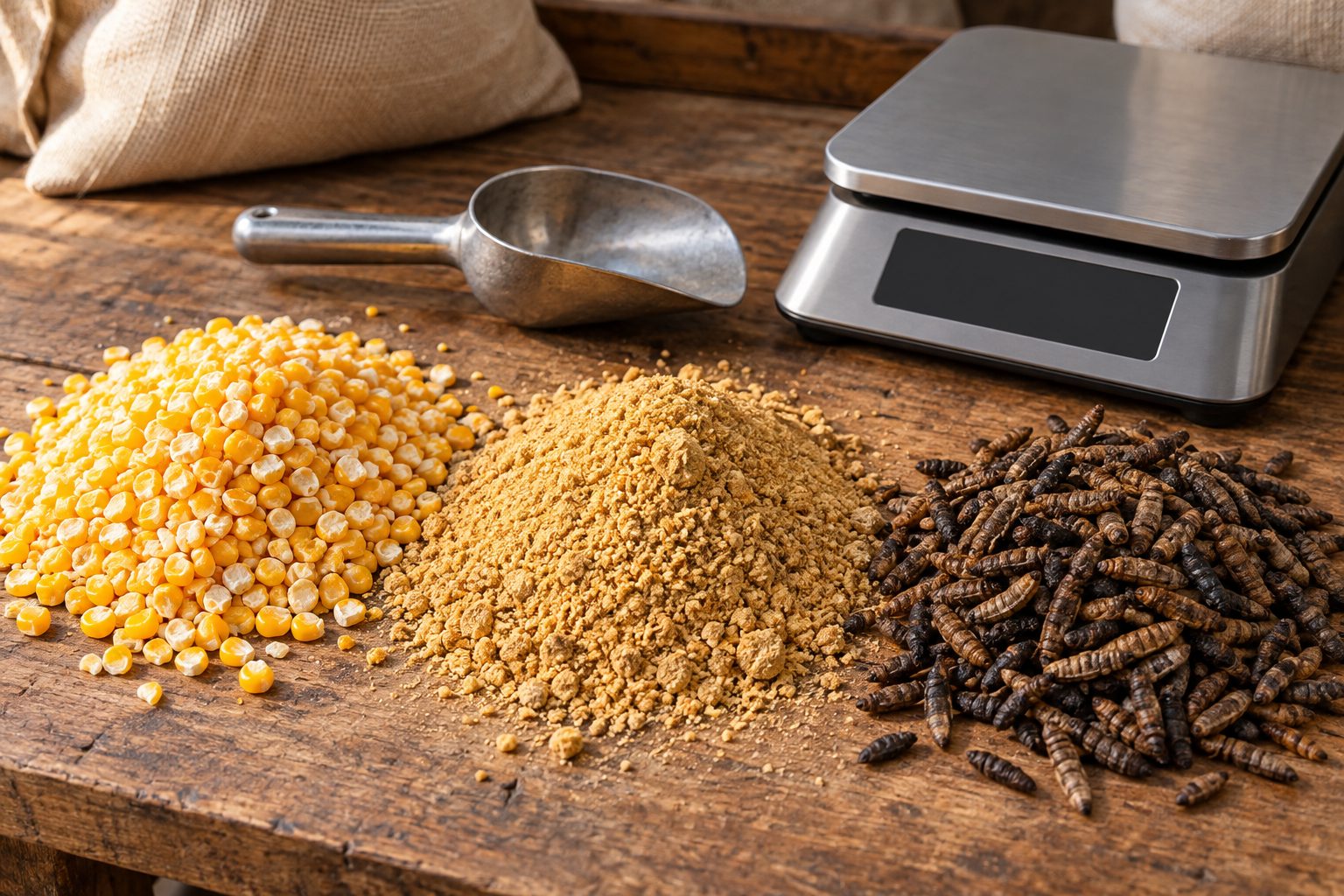
Once your own feed works well, you may have a second business. Nearby farms face the same feed costs, so a farmer who solves feed could one day sell it to them. If you plan to sell feed or larvae meal, check your country’s feed rules first.
What to watch
- By the end of October 2026: whether the AFEX soybean price is above or below the 788.83 naira per kilogram it was on 29 September 2026.
- By the end of November 2026: your feed cost for each kilo of bird sold, from your first flock.
- By December 2026: the price of maize in your local market after this year’s harvest.
Start with the feed
Before you buy a single chick, price your feed for a full year. Get three quotes from feed sellers, whose prices include milling and delivery. Then price the cost of mixing it yourself, including premix and a lab test. Run a small trial before you switch the whole flock. If your own mix costs less per kilo of bird, that saving is your first business opportunity.
We find one opening like this every week, with the size and what it takes. Get next week’s in your inbox. Free.
FAQ
How much does feed cost in a poultry business?
Feed is the largest cost on most commercial farms. An FAO review of Nigeria’s feed industry puts it at up to 60 to 80 percent of production costs on intensive poultry and pig farms. So the price of protein and grain matters a lot to your profit.
Is it cheaper to make your own poultry feed?
It can be, when you count feed cost per kilo of bird. Start with clean grain, a tested recipe and a premix. Then run a small trial flock against bought feed before you switch.
Can black soldier fly larvae replace soybean meal?
In part. A Kenyan study found larvae meal could replace up to 42 percent of soy or fish meal in starter feed. In finisher feed it replaced up to 55 percent, and the birds grew just as well.
What should a poultry farming business plan include first?
Start with a full year of feed costs, because feed is the biggest cost. Then add chicks, housing, water, vaccines and labour. Plan where your feed comes from before you plan your flock size.
The Brief
Get Next Week's Opening.
- How big it is, in dollars.
- What has to be true for it to work.
- Who is placed to move first.
Free. One email a week. One click to leave.