
The Brief
From $6 to $221: where Ethiopia's coffee gains its value
Ethiopia ships almost all its coffee green, yet drinks about 40 percent of its crop at home. This guide prices each step from bean to cup, and what a small roaster needs to start.
One kilo of green coffee traded near $6 on the world benchmark in September 2026. For anyone in the coffee value chain, that kilo sold as 40 lattes at a US café price brings in about $221.
Those are drink sales before costs, about 37 times the bean price. Over five years, 99.7 percent of Ethiopia’s coffee exports by volume left green. Yet Ethiopia drinks about 40 percent of its own crop, and its small roasters are growing.
This guide prices each step from farm to cup, then what a small roastery needs and the rules to check.
Get one real business opening in Africa each week, sized in dollars. Free.
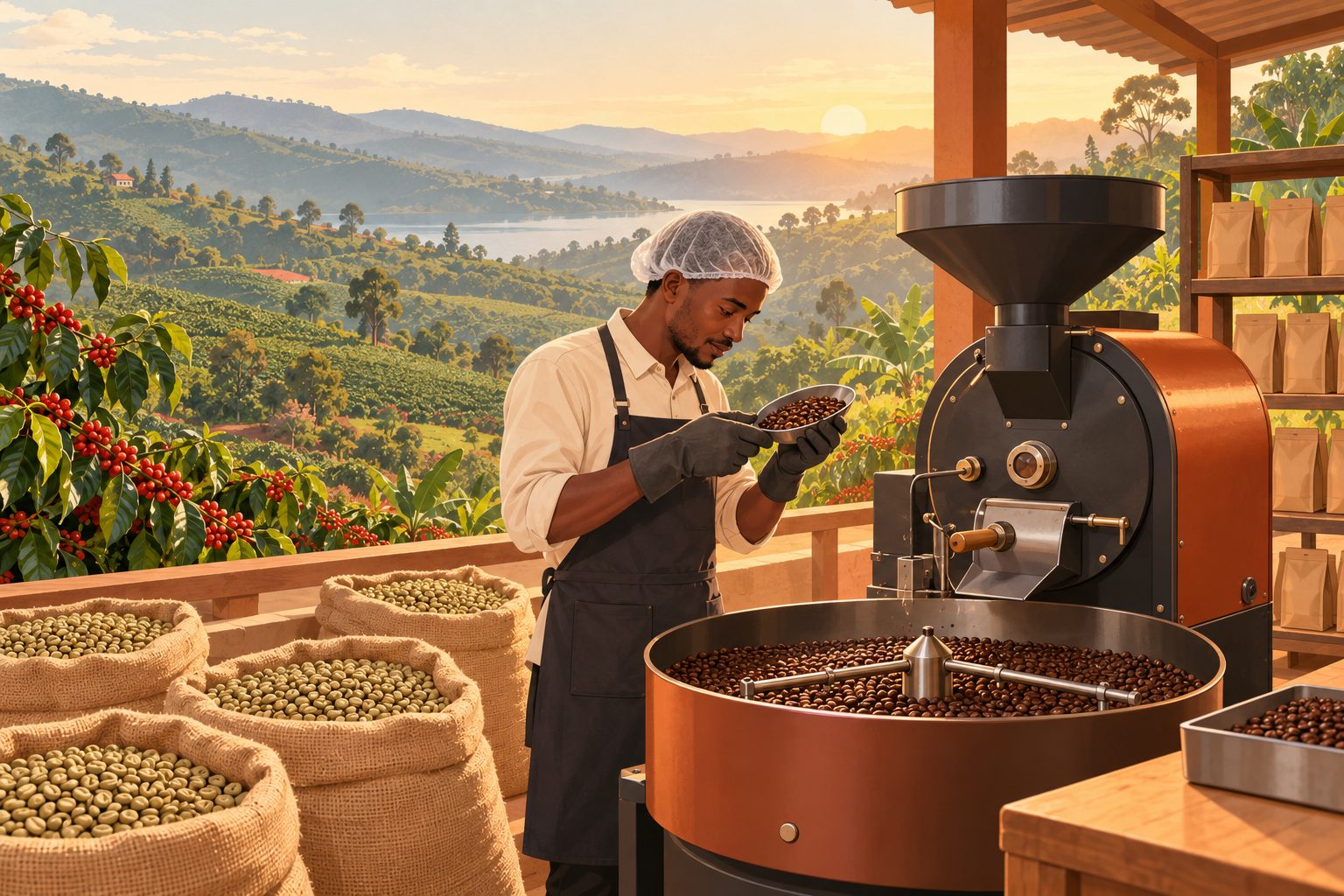
Coffee gains value at each step from cherry to cup
The coffee value chain starts with a red fruit called a cherry. Farmers pick it, then it is washed or dried in the sun. The fruit and skin come off, leaving green beans to sort and sell. Roasters heat the beans until they turn brown, and cafés turn them into drinks.
It takes about 6 kilos of fresh cherry to make 1 kilo of green coffee.
Ethiopia earned more than $3.1 billion from coffee exports in its 2025/26 fiscal year. Nearly all of it left as green beans. The table shows what a kilo is worth after that.
| Step | Per kilo | When and where |
|---|---|---|
| Green coffee, world price | $5.78, about $6 | ICO, September 2026 |
| Green coffee, Ethiopia’s exports | About $5.64 | Rough average, 2024/25 |
| Roasted beans, per roasted kilo | $9.24 to $19.24 | Kenyan price lists seen in October 2026 |
| Lattes from 1 kilo of green beans | About $221 in sales | US independent cafés, Q2 2026 |
These rows come from different places and dates. They are not one batch.
One green kilo brings in about $221 at a US café
The cup is where the biggest jump happens. Roasting 1 kilo of green coffee leaves about 850 grams, at a 15 percent weight loss. At 18 grams per latte, that makes 47 lattes in theory. Allow for waste, and it is about 40.
US independent cafés averaged $5.54 a latte in the second quarter of 2026. So 40 lattes bring in $221.60. That is about 37 times the $6 world price of the green kilo.
These are sales before costs. The café still pays for milk, cups, staff, rent and power. Profit is what is left.
African café prices are lower. A double Americano at Artcaffé in Kenya costs KSh 320, about $2.46. Forty cups bring in about $98, still many times the bean price.
Ethiopia drinks about 40 percent of its own coffee
Ethiopia is among the biggest coffee drinkers of all the major growers. The US farm agency’s office in Addis Ababa puts home use at 4.5 million bags of 60 kilos in 2025/26. The crop was 11.56 million bags. For 2026/27, it forecasts 5.0 million of 12.1 million bags.
Exports look very different. Over the past five years, green beans made up 99.7 percent of coffee exports by volume. Roasted coffee made up 0.3 percent.
Freshness explains the split. Green coffee keeps for about six months, and some lasts a year. Roasted coffee starts to lose flavour 7 to 14 days after roasting.
So roasting belongs near the drinker, and in Ethiopia the drinker is at home. Addis Ababa now has more local cafés and small roasting firms.
Tomoca shows how far one roaster can go. It has roasted coffee in Addis Ababa since 1953. In March 2025 it ran 30 branches and sold a standard cup for 95 birr.
What does a small coffee roasting business need?
A small roastery needs four things. These are a roaster, a steady supply of green beans, bags that keep coffee fresh, and a safe room with good air flow. Most beginners start with a drum roaster that holds 1 to 3 kilos a batch. Add a grinder, a scale and a bag sealer.
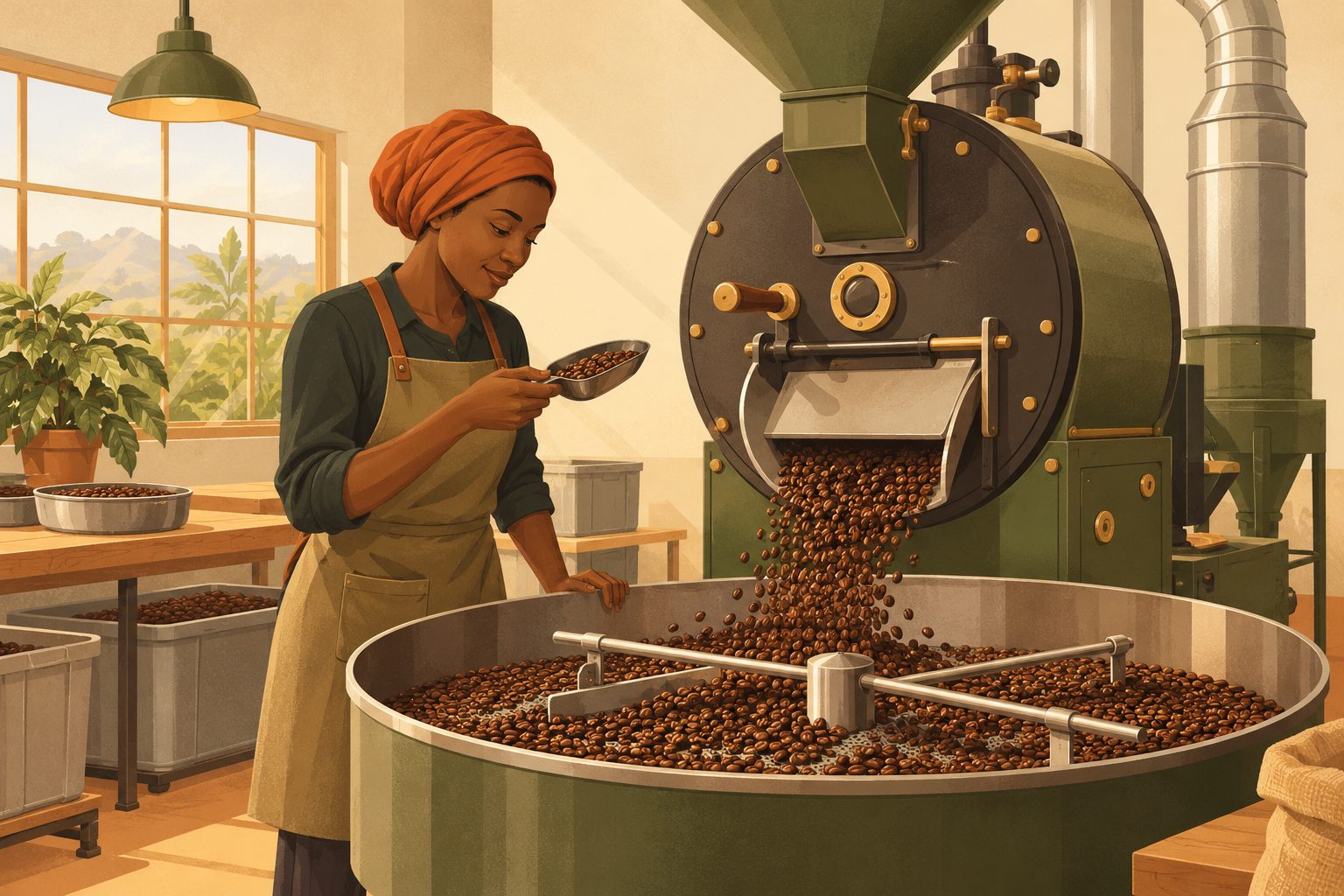
A 2026 price guide puts new 1 to 3 kilo roasters at about $1,000 to $7,500. Used ones often sell for 30 to 50 percent of the new price. Professional fitting runs $500 to $5,000, and gas or power work can add more. These are US prices; shipping and import duty come on top.
Each roasted kilo uses about 1.2 kilos of green beans, because roasting dries them out. Roasted beans give off gas for days. Bags with a one-way valve let it out and keep air out.
Stale stock is a real cost. Roast small batches to order for cafés, offices and shops you can reach in a day or two.
Roasters near the farm are growing and winning prizes
Africa grew an estimated 25.0 million of the world’s 183.6 million bags in 2025/26. A growing share of that crop now meets a local roaster first. Uganda shows the pace: it had 14 licensed roasters in 2016/17 and 90 in 2022/23, and its roasters now win prizes abroad.
In 2023, 13 of its 15 samples won prizes or praise at a Paris contest for coffee roasted where it grows. Gorilla Highlands and Sasa Coffee took gold.
In Kenya, Nakuru Coffee Roastery lists a kilo of roasted beans at KSh 2,500. Kiambu Coffee Marketing lists one at KSh 1,200. Uganda also plans the Nonda Coffee Park, to process 42,000 tonnes a year for a proposed $200 million. In Ethiopia’s cities, barista and roasting contests are flourishing.
Licences, standards and staying safe
Check the rules before you sell your first bag. In Ethiopia, coffee trade runs under Proclamation No. 1051/2017.
The Ethiopian Coffee and Tea Authority (ECTA) issues certificates of competency. Ask ECTA which one a roaster needs. Roasting for sale at home is a licensed coffee business, and selling abroad needs a separate exporter certificate.
Selling abroad is a bigger step. An ECTA exporter certificate asks a single owner for at least 15,000,000 birr in starting capital.
Ask the Ethiopian Food and Drug Authority about food labels, and the Ministry of Revenues about tax. In Kenya, ask your county government and the Coffee Board of Kenya. In Uganda, ask the farm ministry’s coffee department.
Pay for a machine only after you see it working, in person or on a live video call. When you sell, check the money is in your own account before you hand over goods. Payment texts can be faked.
What to watch
- Early November 2026: the ICO’s October price report, after a world price of $5.78 a kilo in September.
- July 2027: Ethiopia’s coffee export earnings for 2026/27, after more than $3.1 billion in 2025/26.
- September 2027: the end of USDA’s 2026/27 coffee year for Ethiopia, which runs October to September, with home use forecast at 5.0 million bags.
Start with one café
Find one café, office or shop that serves coffee every day. Ask what beans it buys and how fresh they are.
Then price a month of green beans, valve bags and machine time before you buy a roaster.
Coffee is one opening we have sized in dollars, from bean to cup. Get next week’s opening in your inbox, free.
FAQ
What is the coffee value chain?
The coffee value chain is every step from farm to cup: growing, picking, drying or washing, sorting, roasting, packing and brewing. Each step adds work and value. A green kilo near $6 on the world benchmark brings in about $221 as lattes at US café prices, before costs.
How much does it cost to start a coffee roasting business?
A 2026 price guide puts new drum roasters that hold 1 to 3 kilos at about $1,000 to $7,500. Used ones often sell for 30 to 50 percent of that, and fitting runs $500 to $5,000, plus shipping and duty. Budget too for green beans, valve bags, a licence and rent.
How much weight does coffee lose when roasted?
Roasting dries the beans, so they get lighter. Loss runs from about 10 percent for very light roasts to 25 percent for very dark ones, and 15 percent is a common figure. The ICO counts 1.19 kilos of green coffee for each roasted kilo.
How much of its own coffee does Ethiopia drink?
Ethiopia drinks about 40 percent of its own coffee. The US farm agency’s Addis Ababa office puts home use at 4.5 million 60-kilo bags in 2025/26, from a crop of 11.56 million. It forecasts 5.0 million of 12.1 million bags for 2026/27.
The Brief
Get Next Week's Opening.
- How big it is, in dollars.
- What has to be true for it to work.
- Who is placed to move first.
Free. One email a week. One click to leave.